Services

Geotechnical Engineering 

Expert Geotechnical Services

Northland’s ground is more complex than it looks. Expansive clays, peat deposits, and the unstable geology of the Northland Allochthon mean that what’s on the surface rarely tells the full story. RS Eng carries out geotechnical investigations across Northland — delivering consent-ready reports that give builders, architects, and councils the ground truth they need. Whether you’re breaking ground on a new home, subdividing rural land, or buying a section in the Far North, we’ll tell you what’s there and what to do about it.

Geotechnical Services: 

Every investigation is specific to your site. We don’t apply generic assumptions — we test, analyse, and report on exactly what the ground beneath your project is doing, so your foundation design is right the first time.

Let's work together

Soil and rock investigations

Foundation design and analysis

Slope stability assessments

Geotechnical reporting

Ground improvement techniques

When Do You Need a Geotechnical Report?

A geotechnical report is required or strongly recommended in the following situations:

Request a Geotech Report

  • Building a new home or structure
    Whangarei District Council, Far North District Council, and Kaipara District Council all commonly require geotechnical assessment as part of a building consent application — particularly on sloped sites, coastal land, or sections with any history of fill or earthworks. Submitting without one can delay or stall your consent.
  • Subdividing land
    Resource consent applications for subdivision in Northland typically require a geotechnical assessment to demonstrate that proposed building areas are suitable for development. This is not optional — it’s part of the consent process.
  • Buying land
    A pre-purchase geotechnical assessment isn’t always required, but it’s one of the most cost-effective decisions you can make before settlement. Identifying ground constraints before you buy — not after — protects your investment and informs any development plans.
  • Problem sites
    Visible erosion, cracking in existing buildings, a history of earthworks or fill, waterlogged ground, or proximity to steep slopes all warrant investigation before any building work begins.

What Makes Northland Ground Conditions Different?

Northland has some of the most varied ground conditions in New Zealand — and some of the most challenging. Understanding what’s common in this region helps explain why a geotech report is worth taking seriously here.

Request a Geotech Report

  • Expansive clays are widespread across Northland. These soils shrink and swell significantly with seasonal moisture changes, causing cracking in foundations that weren’t designed to handle the movement. Northland and Auckland have the highest rates of expansive clay in New Zealand.
  • Peat and organic soils occur throughout low-lying areas and river flats. Peat compresses under load — sometimes significantly — and often sits below a surface that appears stable and dry. Without investigation, peat beneath a building site can cause settlement issues years after construction.
  • Soft alluvial soils along Northland’s river valleys and coastal plains have low bearing capacity and require specific foundation design.
  • The Northland Allochthon is a regional geological feature — a large body of weak, disrupted rock that underlies much of Northland. Even on relatively gentle slopes, this geology can create instability that’s not visible from the surface.
  • Roughly 40% of homes in Northland require engineer-designed foundations, which reflects how frequently ground conditions here fall outside standard assumptions. An RS Eng investigation gives you site-specific data, not a regional average.
How the Process Works

We follow a clear four-step process to assess your site, carry out testing, and deliver a report suitable for design and consent requirements. Most residential projects can be completed efficiently with minimal disruption.

Request a Geotech Report

  • Step 1 — Get in touch
    Contact us with your site address and a brief overview of your project. We’ll advise on the type of investigation required and provide a fee estimate. Most residential investigations are straightforward to scope from basic site information.
  • Step 2 — Site investigation
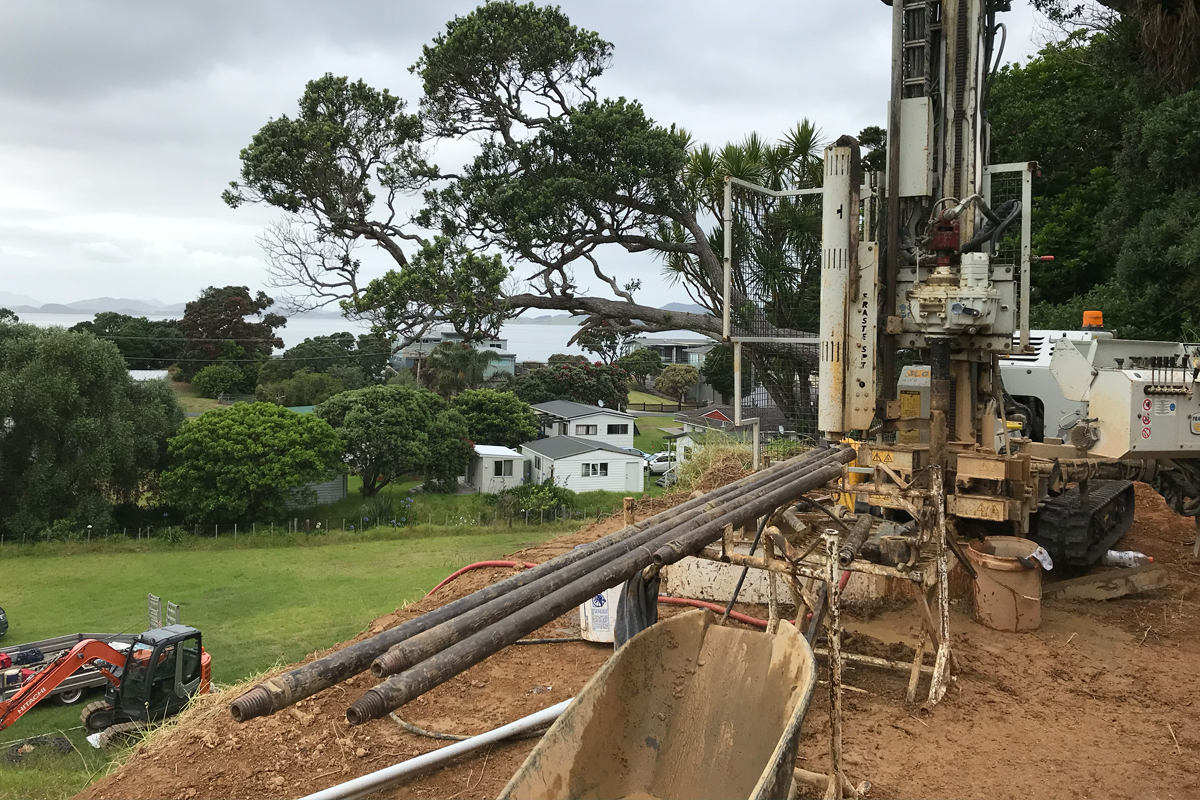
    Our engineers visit your site and carry out ground testing — typically test pits, boreholes, or dynamic cone penetrometer (DCP) testing depending on the site conditions and project requirements. Fieldwork for a standard residential site is usually completed in a single visit.
  • Step 3 — Analysis and reporting
    Test results are analysed in the office. We assess bearing capacity, identify any ground hazards, and determine appropriate foundation recommendations for your specific site and build type.
  • Step 4 — Report delivery
    You receive a comprehensive geotechnical report, formatted to meet council requirements and ready for building consent lodgement. Turnaround from site visit to completed report is typically 5–10 working days for standard residential investigations.
Frequently Asked Questions About Geotechnical Reports in Northland

A geotechnical report is a technical document that describes the soil and ground conditions at a specific site. Prepared by a qualified geotechnical engineer, it includes the results of on-site testing, an analysis of ground stability and bearing capacity, and specific recommendations for foundation design. In New Zealand, geotech reports are commonly required for building consents and subdivision resource consents.

In most cases, yes. Whangarei District Council, Far North District Council, and Kaipara District Council all require or strongly recommend geotechnical assessment for new builds — particularly on sloped, coastal, or undeveloped land. Submitting a consent application without one on a site that requires it will likely result in a request for further information and delays to your consent. It’s worth confirming requirements with your council or your building designer early in the process.

For a standard residential site, turnaround from site investigation to completed report is typically 5–10 working days. More complex sites — larger projects, challenging terrain, or investigations requiring laboratory testing — take longer. We’ll always confirm a realistic timeframe upfront so you can plan your consent submission accordingly.

For a standard residential site in Northland, a geotechnical report typically costs between $1,500 and $3,000+. Pricing depends on site access, the type of investigation required, and the complexity of the ground conditions. Larger commercial projects or sites with challenging conditions will cost more. Contact us for a fee estimate — we’ll give you a clear scope and price before any work begins.

It’s not always required, but it’s frequently one of the best investments you can make before settlement. A pre-purchase geotechnical assessment identifies ground constraints — peat, unstable slopes, poor bearing capacity — before you commit. Discovering those issues after purchase significantly limits your options and can affect the site’s developability and value. We offer pre-purchase assessments across Northland.

A builder’s report assesses the condition of an existing building — structure, weathertightness, maintenance issues. A geotechnical report assesses the ground beneath a site, regardless of what’s on it. They serve different purposes: a builder’s report is about what’s been built, a geotech report is about what you can safely build and how. For a new build or vacant land, a geotech report is the relevant document.

The most frequent issues RS Eng encounters across Northland are expansive clays (which swell and shrink with moisture, cracking inadequately designed foundations), peat soils in low-lying areas, soft alluvial soils along river flats and coastal land, and slope instability linked to the Northland Allochthon geology. These conditions are manageable with the right foundation design — but they do need to be identified and designed for, not discovered after construction begins.